
Sometimes, when you travel, even the best laid plans can be quickly and easily blown up. After a long daytime flight in economy with a one-year-old from Brussels to Atlanta, we were not thrilled to be sitting in the back of the bus again for another long economy flight from Seattle to Tokyo. We sighed and thought, well, let’s just grit our teeth and get through it. At least the baby bassinet that we requested will make it somewhat easier.
Reader, it helps to always check the fine print. When we checked in at the counter, we said that we had requested a baby bassinet over the phone and just wanted to remind them of this. The agent at the counter took one look at our chubby 12-month-old baby and asked politely, “how much does he weigh?” I answered (truthfully) that I didn’t know, which was true, but figuring that there was a weight limit, I said that I could put him on the luggage scale. I did so, and our chubby little guy was just 300 grams over the limit of 10 kilograms. Japan, being Japan, the agent was not willing to bend the rules and said that unfortunately, we would not be able to use the baby bassinet during the flight.
So that’s what happened to us, but for you, much smarter, and hopefully with a much smaller baby, any of the seats in row 20 (A,B,C,D,F,G,H,J or K) or 29 D, 29F, or 29G is where you are going to want to sit to benefit from a baby basinette during your flight. There are four bassinet spots (three in row 20, and one in that center bulkhead of row 29), so as long as you call as soon as you book the ticket, you should be fine, as they are distributed in a first-come, first-served manner.
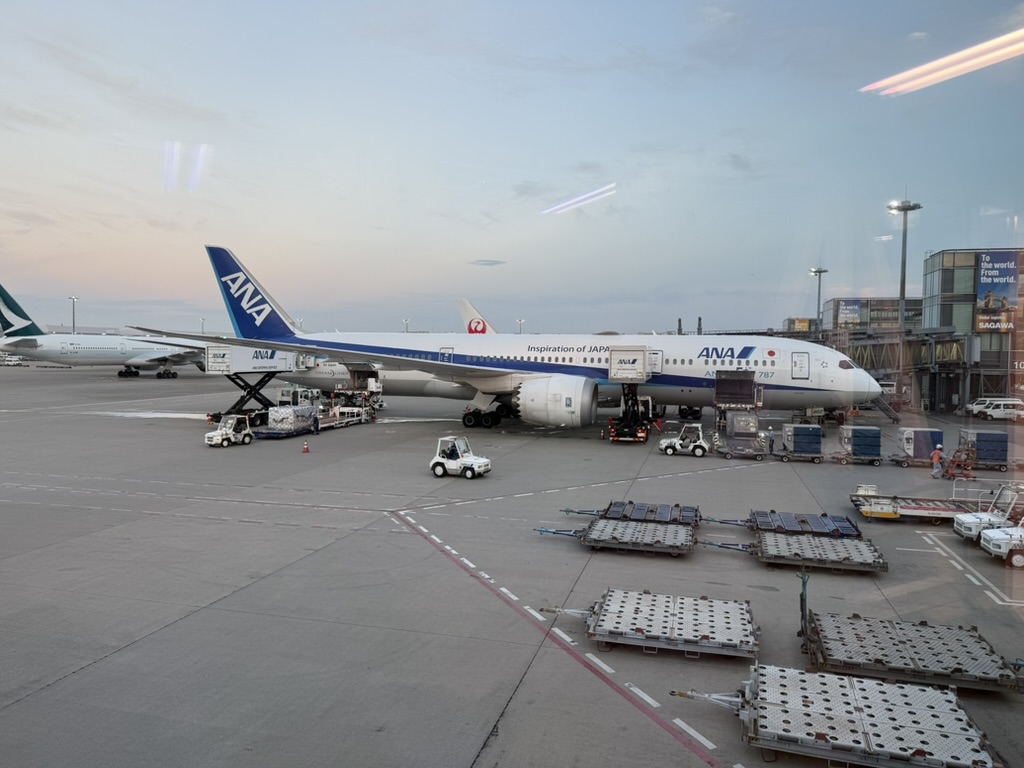
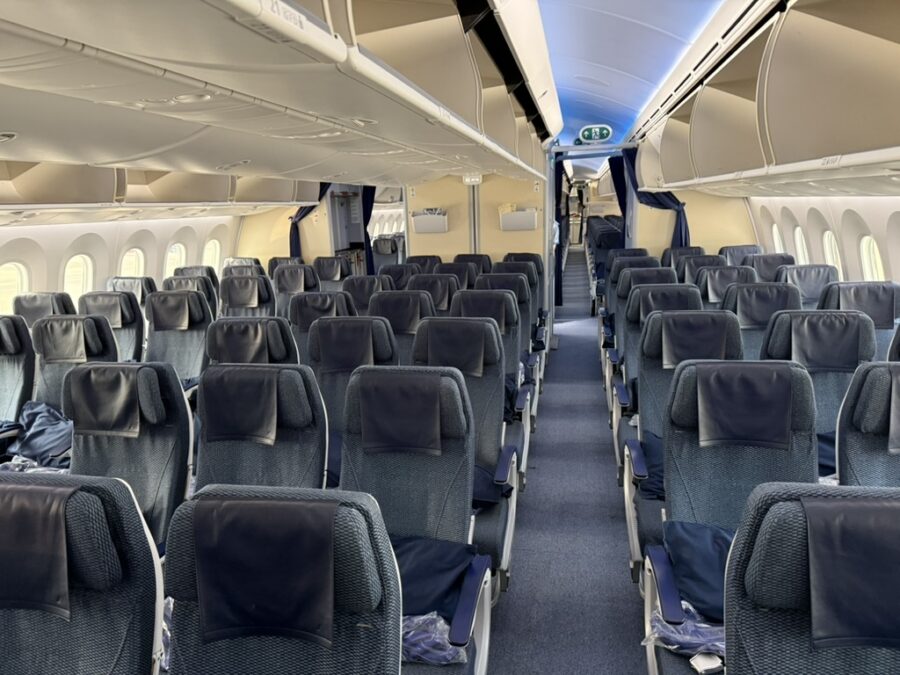
The economy seat on ANA’s Boeing 787-9 Dreamliner
Even though our baby was too big for the bassinet, we were allowed to stay in the bulkhead seats in 20B and 20C. While the additional legroom was nice, it was noticeable how thin the seats were, with one of those immovable bulkhead row armrests taking up a bit of space on an already skinny seat. For comparison, while JAL offers 18-18.9 (depending on configuration) inches of width on its economy class seats on the 787-9, ANA offers just 17.3. If you shave a bit off of that due to the immovable armrest, you begin to feel squashed.
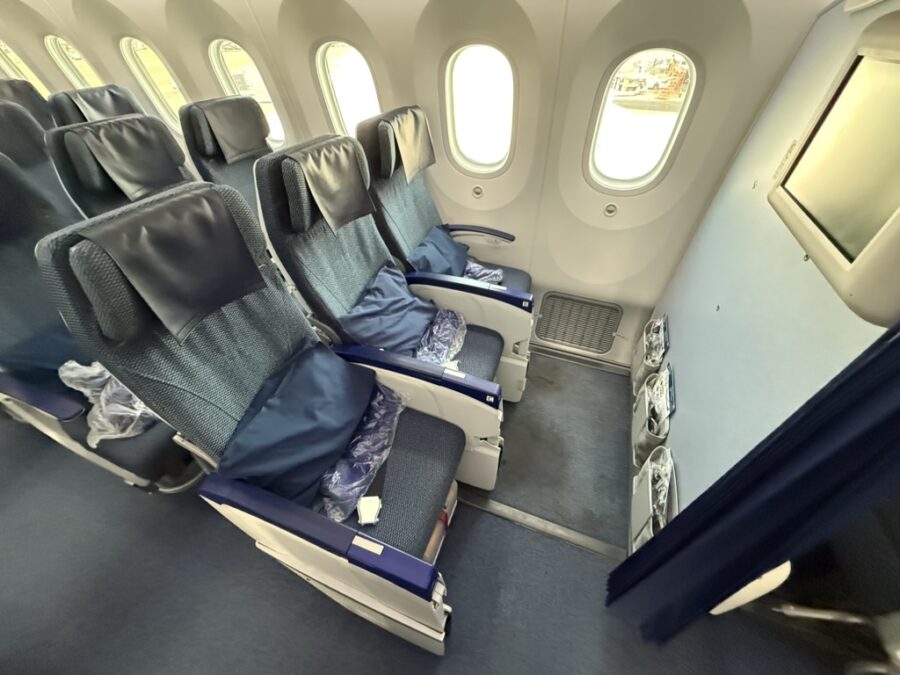
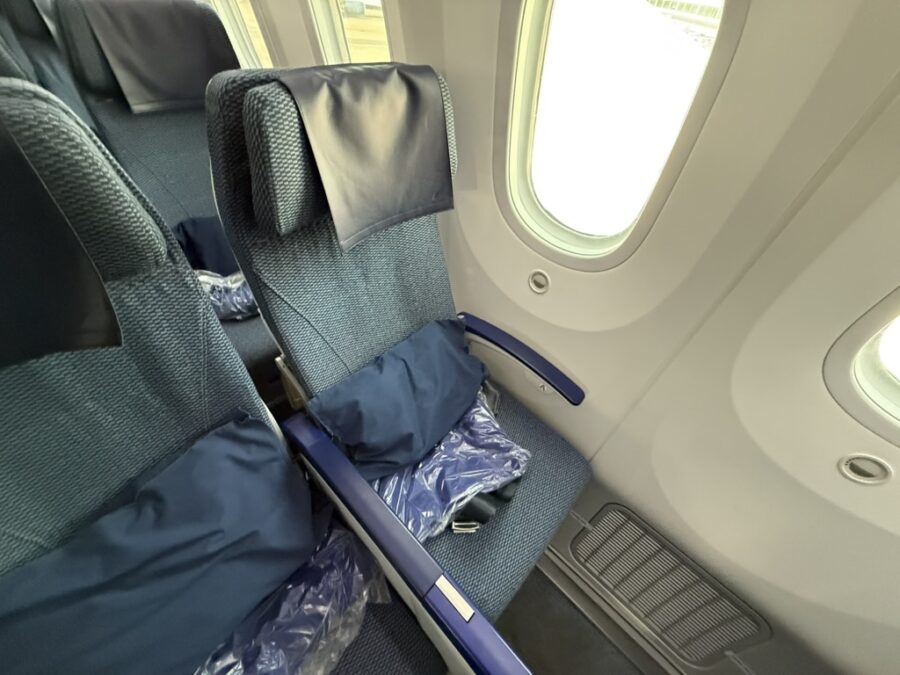
The seat recline was ample enough and with the person behind me having 33 inches of pitch rather than the 31 inches that American airlines typically have, I didn’t feel too bad about cramping the person behind me.
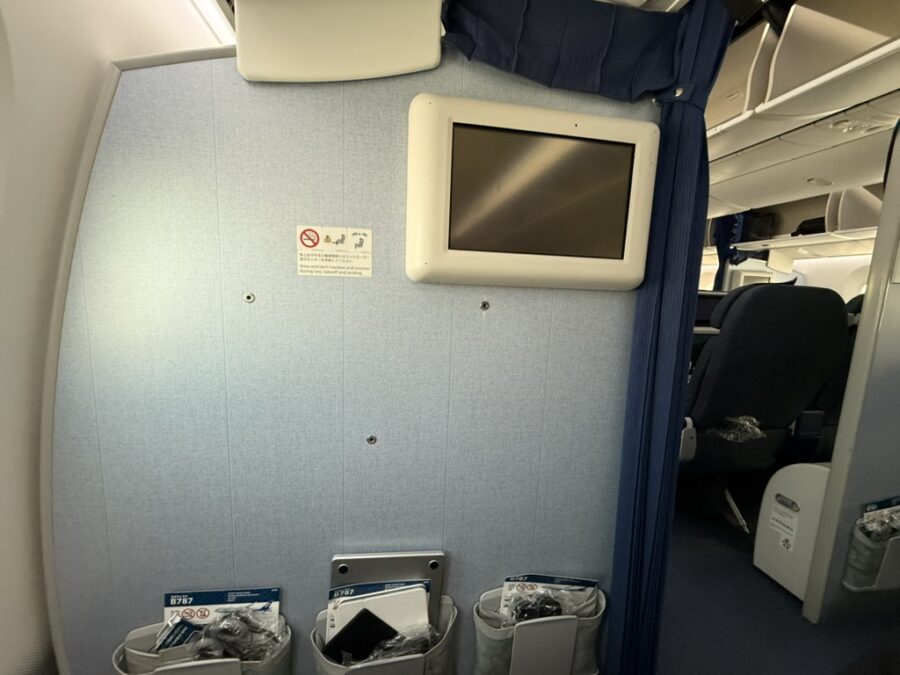
As always in a bulkhead, the in-flight entertainment screen (I found the system to be a bit dated) is in the armrest and was a bit loose. It felt like a nut or bolt could have been tightened somewhere, but in any event, I watched my iPad for most of the flight.
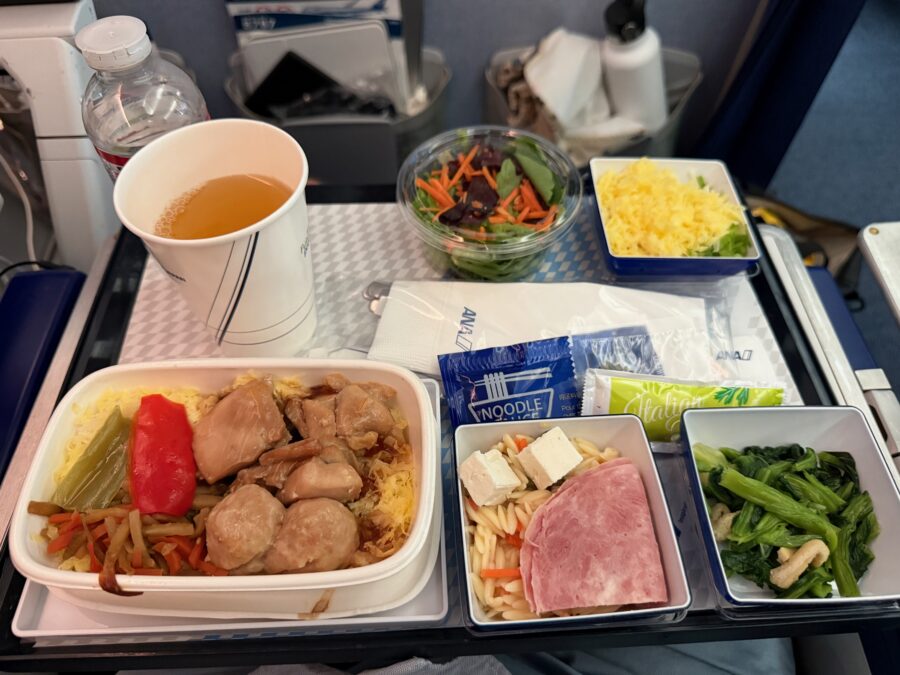
The food and drink in ANA’s economy class
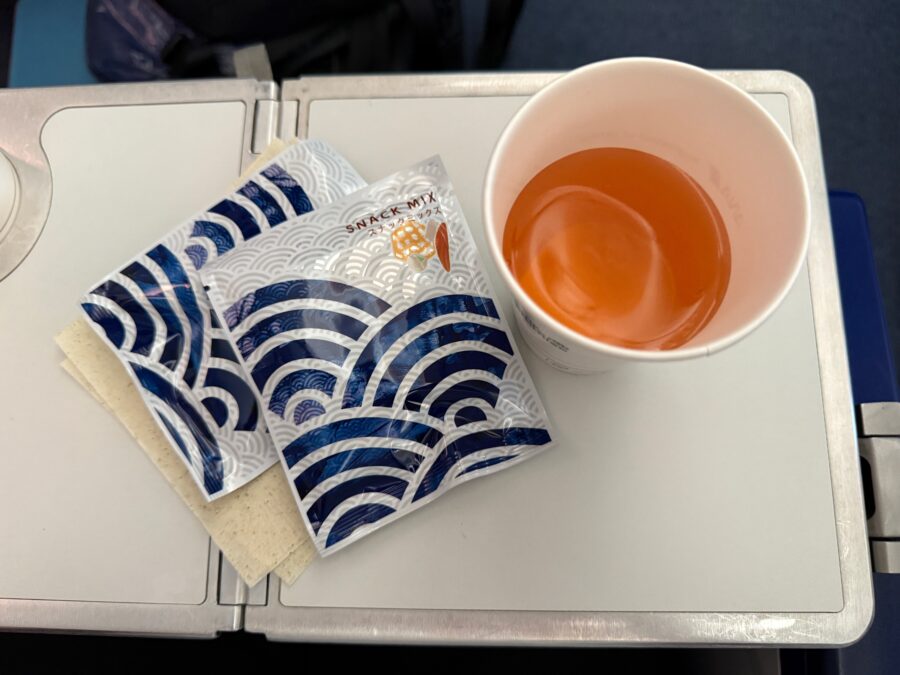
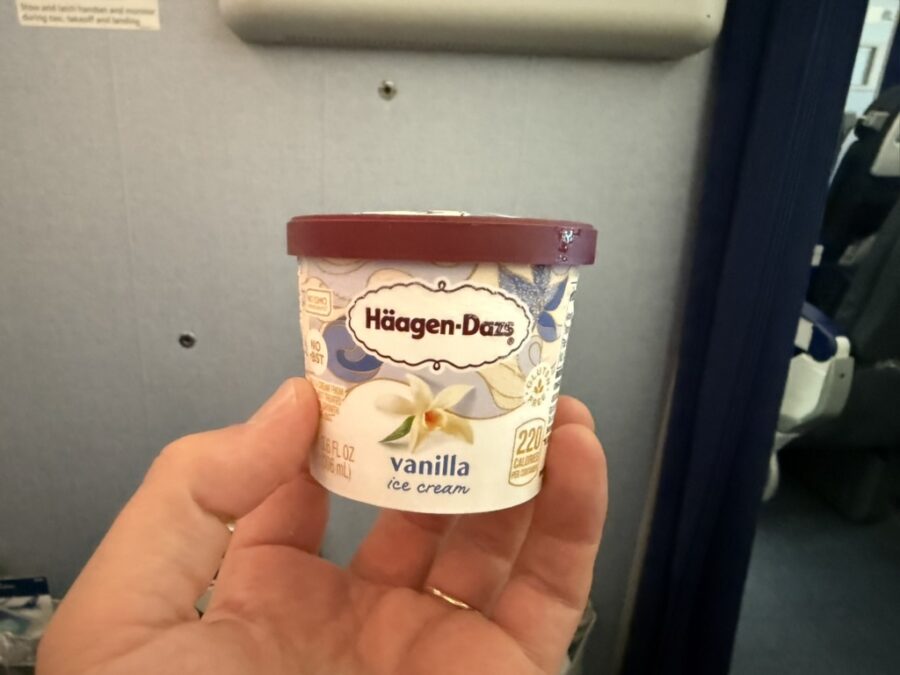
With the late afternoon pushback, the first meal to be served was dinner. First, though, there was a drink and snack service, with a bag of great rice snacks being handed out. For the meal, I chose the chicken with rice, which was accompanied by a salad, some greens and tofu, soba noodles and oddly, a ham and feta orzo salad. While there was a nice selection of alcoholic drinks available, I stuck to water and tea throughout the duration of the flight. After the meal, as seems to be tradition on Japanese airlines, there was a miniature-sized Häagen-Dazs served as well.
The second meal, for reasons beyond me, was breakfast. While this made sense for the Seattle time zone, I thought that airlines typically tried to adhere to the arrival city’s time zone when it came to the second meal, and we touched down in Tokyo at around 7:00 PM. However, I slept through it, so I can’t really complain.
ANA’s service on board the Boeing Dreamliner 787-9
ANA flight attendants work harder than any other airline. That’s a hill I’m willing to die on. A long time ago, on one of my first flights to Tokyo, I watched flight attendants walk down the aisle with a piece of tape, picking up crumbs on the floor with it. It’s truly another level if you ask me, and almost seems like an entirely different profession from, say, flight attendants working for a US airline.
All was not lost because we were unable to get the baby bassinet. Soon after we took off, I asked the chief purser whether my wife would be able to lie down in the two empty rows I had noticed in the back of the plane (41DFG and 42DFG). The purser informed me that unfortunately, no, my wife couldn’t. Later, I realized that it was because those rows are used for crew rest, and even included curtains that you could draw around the seat. While I’ve seen this in business class before, I had never seen economy rows given up for that purpose, and found it odd that there was no crew rest built into the plane somewhere else, in one of those hidden compartments, so that the airline wouldn’t have to lose revenue from those six seats.
After about five hours into the flight, I guess the flight attendants had all taken their naps, because the very kind purser came back to our tow to inform my wife that she could go lie down with our son on the back rows. This was a life saver, because up to this point, walking up and down the aisles with him and letting him play around in the galley was the only thing keeping him occupied.
The bottom line
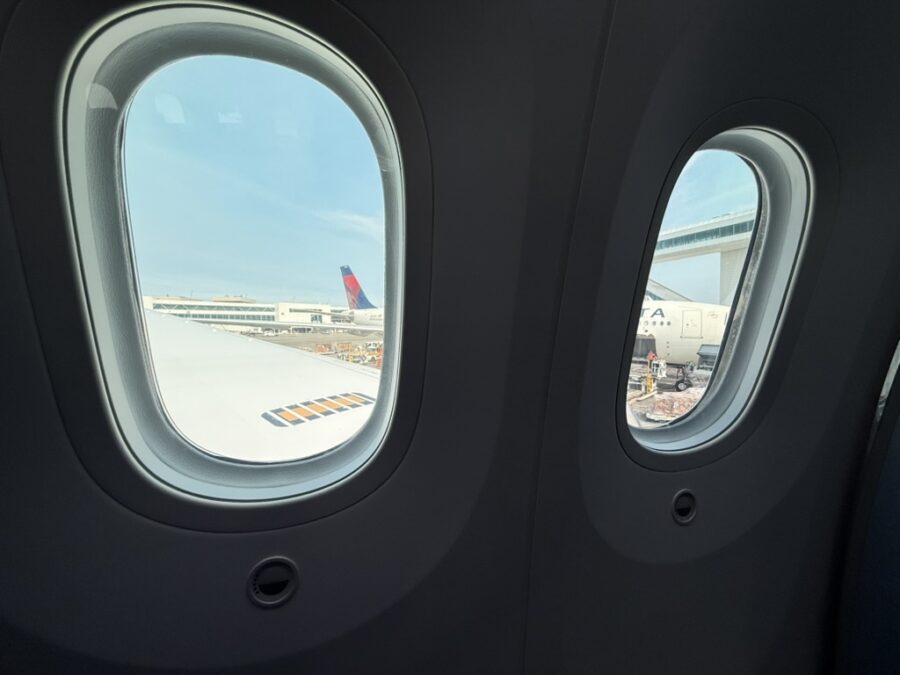
I had two gripes about the flight. The first is that after the meal service, for the vast majority of the 10-hour flight, the Dreamliner’s electronic windows were dimmed and the cabin lights were turned off. This was for a 4:00 PM departure flying west, landing at 7:00 PM. The sun was out the entire time, and it was daytime at the destination where we were heading. I can understand turning off the lights on a redeye, but I think airlines should help customers adjust to the time zone of the destination, which this does not do.
The second complaint is about how hot it was on the plane. It was absolutely sweltering, especially, for some reason, in our section. I know that Asian carriers typically keep the plane hotter than on domestic flights, but this was unbearable. I had forgotten my baby fan, but luckily had my cooling towels that I’d purchased on my last trip to Japan.
Other than those two issues, as well as the thin seat, the flight was perfectly enjoyable. While I have slightly more of an affinity for JAL than I do for ANA, ANA is still miles ahead of US domestic carriers in terms of food quality, cabin service and seat pitch (33 inches as opposed to 31 on most US carriers, if you are not lucky enough to grab a bulkhead.